



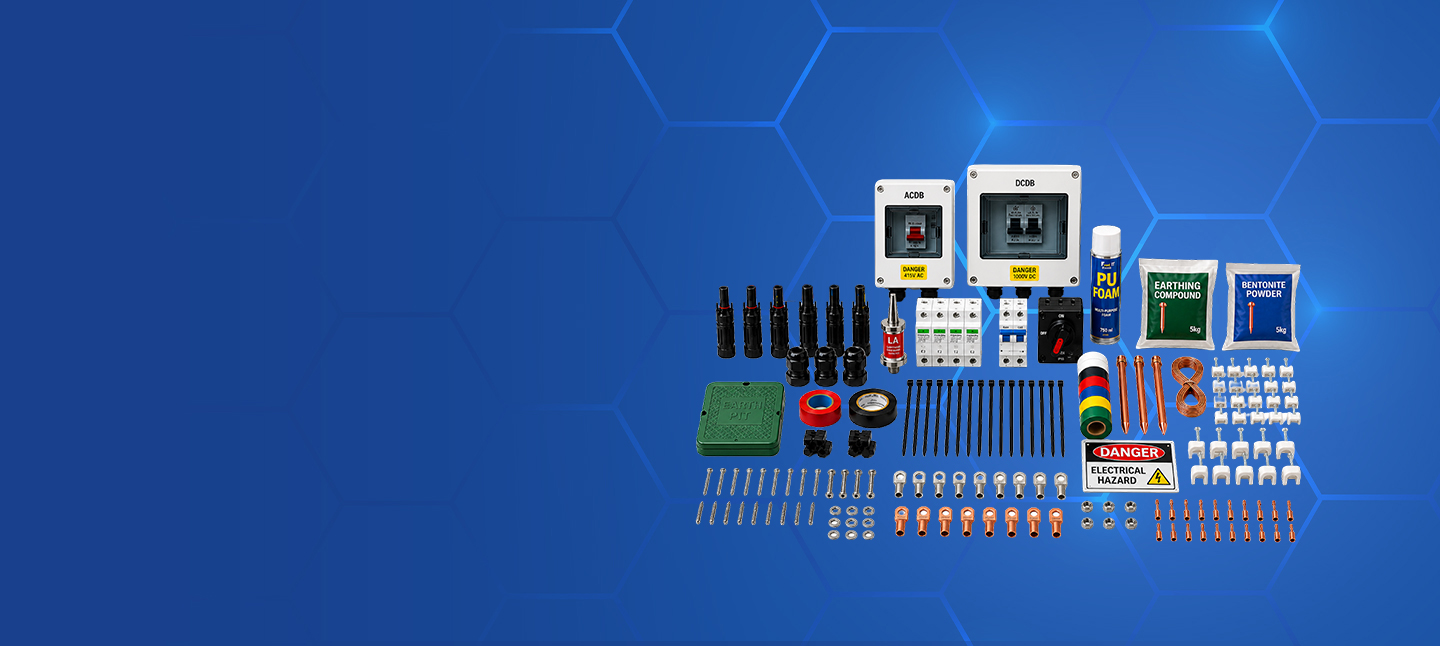
On-Grid Solar Kit 1P1M (ACDB/DCDB)
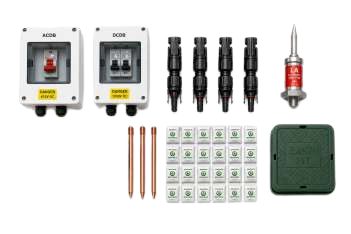
On-Grid Solar Kit 1P1M
(ACDB/DCDB)
- ACDB
- DCDB
- MC4 Connectors
- Lightning Arrester
- Copper-Bounded Earthing Rods
- Bentonite Chemical Bags
- Earth Pit Covers
What Makes It Different?

Focused safety & earthing kit — the protection core of every solar install

Single-Phase Solar ACDB & DCDB with MCB and DC Fuse

1000V DC MC4 connectors (4 nos) for secure panel wiring

Conventional Lightning Arrester with 5-spike welded rod

3 copper-bounded earthing rods for robust grounding

24 kg bentonite chemical bags for low-resistance earthing

Heavy-duty earth pit covers for long-term durability

Compliant with Indian rooftop installation standards
Benefits Built For You

Complete, ready-to-install kit in one box

Faster installation with fewer site trips and less downtime

Quality-assured, compatible components that work together reliably

Safety and compliance built in for worry-free operation

Durable, weather-resistant materials for long-lasting performance

Better value than sourcing parts separately
A Perfect Solar Fit For

Residential Rooftop Solar

Commercial Solar Projects

Industrial Installations

Solar EPC Projects

Rural Electrification

Solar Hybrid Systems
Downloads 
FAQs
What is the purpose of the ACDB and DCDB in a solar system?
The DCDB (DC Distribution Box) protects the DC circuit between solar panels and the inverter, while the ACDB (AC Distribution Box) protects the AC circuit between the inverter and the grid connection point. Together, they safeguard the system against overcurrent, short circuits, and reverse current.
Is this kit compatible with all on-grid grid-tie inverters?
The ACDB and DCDB are designed for single-phase on-grid systems and use standard MCB and DC fuse configurations. Compatibility with your specific inverter should be verified based on the inverter's input/output ratings before installation.
Why is bentonite used in solar earthing, and how does it work?
Bentonite is a mineral compound that retains moisture and reduces soil resistivity around the earthing rod, ensuring a consistently low-resistance ground path. This is especially important in dry or rocky soil conditions where natural conductivity is poor.
How deep should the earthing rods be installed?
Earthing rods are typically driven to a minimum depth of 1 metre or until they reach moist soil, following IS 3043 earthing standards. Your installer will determine the appropriate depth based on soil type and local electrical norms.
Can this kit be used for a hybrid or off-grid solar system?
This kit is configured for single-phase on-grid (grid-tie) systems. While some components like the earthing kit and lightning arrester are universally applicable, the ACDB and DCDB specifications are optimised for on-grid installations.
What IP rating do the ACDB and DCDB enclosures carry?
The enclosures are IP-rated, making them suitable for outdoor rooftop installation where exposure to dust and moisture is expected. The specific IP rating can be confirmed in the product catalogue.
How does the lightning arrester protect the solar system?
The conventional lightning arrester with a 5-spike welded rod intercepts lightning strikes and safely channels the high-voltage surge to the ground via the earthing system, preventing damage to the inverter, panels, and connected equipment.
Is this kit sufficient for a complete on-grid installation, or are additional components needed?
This kit covers the safety and protection core — ACDB, DCDB, MC4 connectors, lightning protection, and earthing. You will additionally need solar cables, mounting structures, panels, and a grid-tie inverter for a complete installation.
Does this kit meet the requirements for PM Surya Ghar or MNRE subsidy-eligible installations?
The kit is built in compliance with Indian rooftop installation standards. However, subsidy eligibility depends on the entire system configuration and empanelled vendor requirements under applicable schemes. Consult your installer or DISCOM for confirmation.
What maintenance does the earthing and lightning protection system require?
Earthing resistance should be tested annually using an earth resistance tester to ensure it remains within safe limits. The bentonite bags help maintain stable resistance over time. The lightning arrester rod should be inspected periodically for physical damage or corrosion.